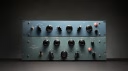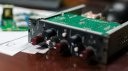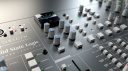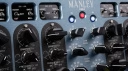
The mixdown stage is a crucial aspect of the recording process, as you finalize your productions for release. We’re taking a look at some of the best stereo EQ units that provide control over your master bus.
Key Facts about Stereo EQs:
To maintain a perfectly balanced stereo image and apply the processing equally across the left and right channels, stereo EQs use linked channels when used in mixing and mastering applications.
Many of the stereo EQs available today are inspired by classic analogue circuit designs that use tubes and transformers to add harmonic character and saturation.
Stereo EQs can be used for broad or more precise toneshaping on channel groups for vocals, guitars, and drums, or across the entire mix bus to improve clarity and cohesion.
Some high-end EQs provide a balance of analogue character and precision with the help of discrete circuitry, stepped potentiometers, and even software-based plugin control.
In this Article:Key Facts about Stereo EQs:Choosing the Best Stereo EQsStereo EQs: SSL UltraViolet EQStereo EQs: elysia Xfilter QubeStereo EQs: DrawmerStereo EQs: IGS AudioStereo EQs: WESAudioStereo EQs: Zähl EQ1Stereo EQs: Cranborne Audio Carnaby HE2Stereo EQs: BettermakerStereo EQs: API 5500The Best Stereo EQs: Manley Massive PassiveFAQ: Stereo EQsMore about Stereo EQs:
Hardware of this nature is not cheap, but it’s still far more affordable than the original vintage designs from the 50s, 60s, and 70s. It’s also available in formats like 500-series, which is more compact and even offers portability for live sound environments.
Like preamps, you will often be confronted with the choice of clean transformerless designs or those that offer classic topologies with transformer or tube saturation. To have the best of both worlds, mastering studios are often equipped with both character-inducing and more transparent types of EQs, so keep in mind the style of music you’re working with.
Choosing the Best Stereo EQs
While some parametric EQ designs are based on well-known classics, others might borrow a feature or two. This is done with the aim of innovating and creating a tool more relevant in the context of modern audio production.
Stereo EQs: SSL UltraViolet EQ
The UltraViolet EQ is the perfect companion to the SSL bus compressor. Derived from the EQ section on the SSL Fusion processor, you get a selection of controls for shaping your mix. This includes two cut filters with four selectable bands, two peaking filters, and an additional LP filter.
SSL UltraViolet EQ · Source: SSL
The main parametric controls are the two variable mid-bands, which also have useful focus switches. This function narrows the Q-factor and increases the gain range, allowing you to make even more precise adjustments. Get it at Thomann.*
More from SSL
Affiliate Links
SSL 500-Series UltraViolet EQ
Customer rating: (44)
$455.00 / £411.00 / 469.00€ at
SSL Fusion Violet EQ Download
Customer rating: (9)
$95.00 / £87.00 / 99.00€ at
SSL Fusion
Customer rating: (147)
$1,499.00 / £1,377.00 / 1,559.00€ at
Stereo EQs: elysia Xfilter Qube
The Elysia Xfilter Qube offers an affordable solution for adding an extremely high-quality parametric EQ stage onto your mix bus. It provides two parametric peaking filter bands with narrow Q switches and two shelving filters with resonant cut switches.
elysia Xfilter Qube · Source: Elysia
All four bands are active, but there is an additional passive filter for adding a gentle high-frequency shine at 12 kHz. Overall, Xfilter is geared toward current music production practices and is also available in a 500-series module, a rack-mountable unit, and a mastering edition. Get it at Thomann.*
More from elysia
Affiliate Links
Elysia xfilter 500
Customer rating: (35)
$759.00 / £677.00 / 785.00€ at
Elysia xfilter qube
Customer rating: (14)
$925.00 / £825.00 / 959.00€ at
Elysia xfilter
Customer rating: (40)
$1,129.00 / £999.00 / 1,159.00€ at
Elysia xfilter Mastering Edition
Customer rating: (3)
$1,850.00 / £1,635.00 / 1,897.00€ at
Stereo EQs: Drawmer
Finding hardware that sounds great and is still relatively affordable isn’t easy, but Drawmer manages to price its gear affordably while still maintaining a high standard of quality. In 500-series, the MQ-2 module is a 7-band Motown-style EQ with a compressor and the Crush function for adding saturation to your channel group or mix bus.
Drawmer 1974 · Source: Drawmer
The fixed frequency points (50, 130, 320, 800, 2,000, 5,000, and 12,500 Hz) have a 10 dB gain range for boosting and cutting, which makes the MQ-2 easy to use. What’s more, the one-knob FET compressor can be placed before or after the EQ in the signal path. Meanwhile, if you need something more precise, but still with a vintage tone, the 1974 also offers plenty of value for the price.
The 1974 is a 4-band EQ with variable low- and high-cut filters, different slope settings on the high and low shelf filters, and variable Q-factor on the high and low midrange bands. This allows you to set the frequency range of all your main channel groups and carve out mix pockets for separation, while adding some flavour from the vintage-style solid-state circuit design. Get it at Thomann.*
More from Drawmer
Affiliate Links
Drawmer MQ-2
Customer rating: (3)
$479.00 / £439.00 / 499.00€ at
Drawmer 1974
Customer rating: (19)
$1,048.00 / £959.00 / 1,089.00€ at
Stereo EQs: IGS Audio
IGS Audio is a boutique manufacturer known for building recreations of classic analogue designs with modern durability and reliability. Within its range, there are stereo equalizers in 19-inch rackmount and 500-series format, designed for sculpting channel groups such as vocals, guitars, synths, and drums, as well as the main output during mixdown and mastering.
IGS Rubber Bands Mastering Edition · Source: IGS Audio
The most affordable option is the Rubber Bands, a Pultec-style passive EQ series, available in mono and stereo 500-series modules and a stereo 19-inch rackmount unit. The Rubber Bands 500 ME (Mastering Edition) has ELMA stepped switches for accurate recall, while the rackmount version has a tube gain stage for added saturation.
As you go up the range, you’ll find the Tilt N’ Bands, inspired by a vintage radio design with a transformer-balanced tube stage and a 500 Hz tilt control that boosts and cuts simultaneously. Meanwhile, the flagship mastering EQ is the 825EQ, a 5-band active tube EQ with proportional Q and ELMA stepped switches for easy recall. Get it at Thomann.*
More from IGS Audio
Affiliate Links
IGS Audio Rubber Bands 500 Mastering EQ
Customer rating: (20)
$990.00 / £885.00 / 1,019.00€ at
IGS Audio Tilt n Bands
No customer rating available yet
$2,799.00 / £2,499.00 / 2,899.00€ at
IGS Audio Rubber Bands
Customer rating: (2)
$1,999.00 / £1,825.00 / 2,090.00€ at
IGS Audio 825EQ
No customer rating available yet
$3,799.00 / £3,390.00 / 3,899.00€ at
Stereo EQs: WESAudio
WesAudio is an innovative Polish manufacturer known for its plugin-controlled analogue hardware in 19-inch rackmount and 500-series. In 500-series modules, there is a choice between the 2-band Prometheus Pultec-style passive EQ with 10 dB gain range and the more modern-sounding Hyperion 4-band EQ with different gain range settings (5 and 15 dB).
WESAudio Hyperion · Source: WESAudio
Both the Prometheus and Hyperion have linked stereo, dual-mono, and mid-side processing modes, and a THD (Total Harmonic Distortion) mode with two settings (Medium and High). On the high-end side of things, WesAudio has the almost limitlessly flexible ngTubeEQ, a 4-band passive inductor-based mastering EQ with variable high- and low-pass filters, THD, and a choice of two output stages.
The ngTubeEQ has the potential to bring in equal parts of precision and vibe, with 12 selectable frequency points per band, and you can select the electronically balanced output or the tube output stage, which uses a custom Carnhill transformer and an Iron Pad with its own control. Overall, with 5 and 15 dB gain range settings and proportional Q mode, the ngTubeEQ is easily one of the best in class for mixing and mastering applications. Get it at Thomann.*
More from WesAudio
Affiliate Links
WES Audio Prometheus
Customer rating: (4)
$1,350.00 / £1,222.00 / 1,389.00€ at
WES Audio Hyperion
Customer rating: (9)
$1,265.00 / £1,139.00 / 1,299.00€ at
WES Audio ngTubeEQ
Customer rating: (1)
$5,599.00 / £5,111.00 / 5,849.00€ at
Stereo EQs: Zähl EQ1
Easily one of the best EQ modules ever designed for the 500 series format, the Zähl EQ1 combines a perfect balance of precision electronics and intuitive musical design. Originally implemented on the AM1 modular mixing console, the EQ1 offers flexibility for mixing and mastering applications with an uncoloured sound and musical contours.
Zähl EQ1 · Source: Zähl
There are four bands and a variable low-cut filter, including a high band (2 to 20 kHz) and a low band (30 to 300 Hz) with fixed Q and bell or shelf filter modes. Meanwhile, the upper and lower midrange bands have adjustable Q-factor controls and a switch that changes the frequency range for different applications.
Each of the EQ bands can be bypassed, so you can hear exactly what each one is doing when you need to, and both the EQ band’s gain and the global I/O gain range can be adjusted (+/- 5 dB and +/- 15 dB) to suit your preference. Naturally, having such depth of control over tone shaping comes at a price, but the Zähl EQ1 isn’t an investment you’ll regret. Get it at Thomann.*
Official Product Page
Affiliate Links
Zähl EQ1
Customer rating: (9)
$1,899.00 / £1,755.00 / 1,989.00€ at
Stereo EQs: Cranborne Audio Carnaby HE2
The Carnaby HE2 from Cranborne Audio takes a slightly different approach, using harmonic saturation for boosting or cutting frequencies. Besides its warm sound, the beauty of the Carnaby HE2 is that you can use it for stereo, dual-mono, or mid-side processing. This allows you to use it for tracking, mixing, or mastering applications, giving it plenty of all-round value.
Carnaby HE2 · Source: Cranborne Audio
To set the frequency range on either channel, there are variable high-cut and low-cut filters, as well as the main high shelf, midrange bell, and low shelf filters. Each of the three main bands can be bypassed, so you can always check your work, and there is an insert on each channel to add additional outboard gear into the signal path.
Also, the Carnaby HE2 is digitally controlled, so you can automate its parameters and recall presets from within your DAW. Overall, the Carnaby HE2 provides a great balance of analogue warmth and modern DAW-friendly workflow, and you can use it in almost any part of the music production process. Get it at Thomann.*
More from Cranborne Audio
Affiliate Links
Cranborne Audio Carnaby HE2
Customer rating: (6)
$2,099.00 / £1,939.00 / 2,198.00€ at
Stereo EQs: Bettermaker
Bettermaker is another high-tech Polish analogue audio manufacturer, and it certainly has its finger on the pulse of mastering hardware design with a combination of vintage and modern designs that suit DAW workflows. Within its range, Bettermaker has a line of plugin-controlled Pultec-style passive EQs for different budgets and applications.
Bettermaker VSPE · Source: Bettermaker
While all three options use the same basic passive circuit, the PQ_Core strips the design down to an exclusively plugin-controlled version of the 2-band EQ. Meanwhile, the Stereo Passive EQ offers a step up from this with hardware controls in a 2U unit. Finally, the top-of-the-range VSPE adds tubes and transformers into the design with a HEAT function for added saturation.
However, one of Bettermaker’s most popular designs by far is the Mastering Equalizer, which combines passive and parametric filters into one workflow, as well as mid-side processing. Also, the unit has a touchscreen interface and 400 preset slots, which are accessible in standalone mode. Get it at Thomann.*
More from Bettermaker
Affiliate Links
Bettermaker Stereo Passive EQ
Customer rating: (1)
$1,850.00 / £1,650.00 / 1,899.00€ at
Bettermaker VSPE
Customer rating: (1)
$3,111.00 / £2,777.00 / 3,199.00€ at
Bettermaker Mastering Equalizer
Customer rating: (7)
$2,899.00 / £2,599.00 / 2,999.00€ at
Stereo EQs: API 5500
The API 5500 is one of those timeless EQ designs, giving you that classic American sound with the proportional Q feature made famous by the 550. Each of the two channels can function independently and provides four bands per channel with shelving filter modes on the high and low bands.
API 5500 · Source: API
The 5500 gets its sound from its completely discrete circuitry with two legendary 2520 op amps in each channel and 2503 output transformers. The 5500 is also versatile, so you can use it in tracking, mixing, or mastering. This is enabled by the ability to adjust the gain range for making more delicate adjustments, with three different settings (x1, x.5, and x.25).
Despite the pricetag, the 5500 will earn its keep in your studio with the high-quality natural sound of the EQ bands, coupled with the ability to use it in any situation. However, you will probably hear a noticeable difference with the 5500 on your mixbus, with the ability to accentuate different areas of your mix in a truly musical way. Get it at Thomann.*
The History of API
Affiliate Links
API Audio 5500 Dual Equalizer
Customer rating: (5)
$3,222.00 / £2,959.00 / 3,389.00€ at
The Best Stereo EQs: Manley Massive Passive
Considered the top of the EQ pile by so many producers and engineers, the Manley Massive Passive has incredibly musical curves for shaping individual sources, channel groups, and entire mixes. Because it’s a passive, Pultec-style design, you can do boosts and cuts in the same area of the frequency range and still achieve amazing results.
Massive Passive XXV · Source: Manley
The key to the design of the Massive Passive is that each band can boost or cut as a shelf or bell filter, and the proportional Q means that the bandwidth will tighten the more gain you add. This means that you can combine ultra-precise corrective cuts with broader boosts to mold the tonal range of any signal to enhance detail.
The Massive Passive is also equipped with variable low-pass and high-pass filters, and perhaps more importantly, a tube makeup gain stage to ensure that your output signal is at the right level for mixing or mastering. Meanwhile, there is also a mastering version of the Massive Passive with stepped pots and filters that are better suited for the task. Get it at Thomann.*
More from Manley
Affiliate Links
Manley Massive Passive
Customer rating: (7)
$5,799.00 / £5,222.00 / 5,998.00€ at
FAQ: Stereo EQs
What is a stereo hardware EQ?
A stereo EQ is an external hardware unit that can make frequency-based adjustments to both the left and right channels simultaneously. This is ideal for processing channel groups and mix bus, and in mastering applications.
Why use a hardware EQ instead of a plugin?
Plugins and hardware EQs have different advantages, which engineers use in different ways. While plugins offer the flexibility of multiple instances in the DAW environment, hardware EQs have unique sonic characteristics.
Are stereo hardware EQs useful for mastering?
Yes. Stereo EQs are popular in mastering workflows because they offer a balance of precision and analogue character for subtle enhancement, and adding polish to a completed stereo mix.
Can a stereo hardware EQ improve stereo imaging?
Yes. Even without any boosts or cuts active, a high-quality hardware EQ can have a solidifying effect on the stereo image, adding balance to the central and wider information.
What should I look for when choosing a stereo hardware EQ?
Key factors include the number of bands, the gain range, digital recall, and whether you require a vintage or modern design approach for your particular application.
More about Stereo EQs:
Thomann’s Guide to Equalizers*
Read more about EQ on Gearnews
*Note: This article about stereo EQs contains affiliate links that help us fund our site. Don’t worry: the price for you always stays the same! If you buy something through these links, we will receive a small commission. Thank you for your support!
The post The Best Stereo EQs for Mixdown and Mastering appeared first on gearnews.com.